
650 / 800 / 1100
Cardstock, solid board, and microflute. It can work with materials such as solid board, cardstock, and microflute.
Key Features
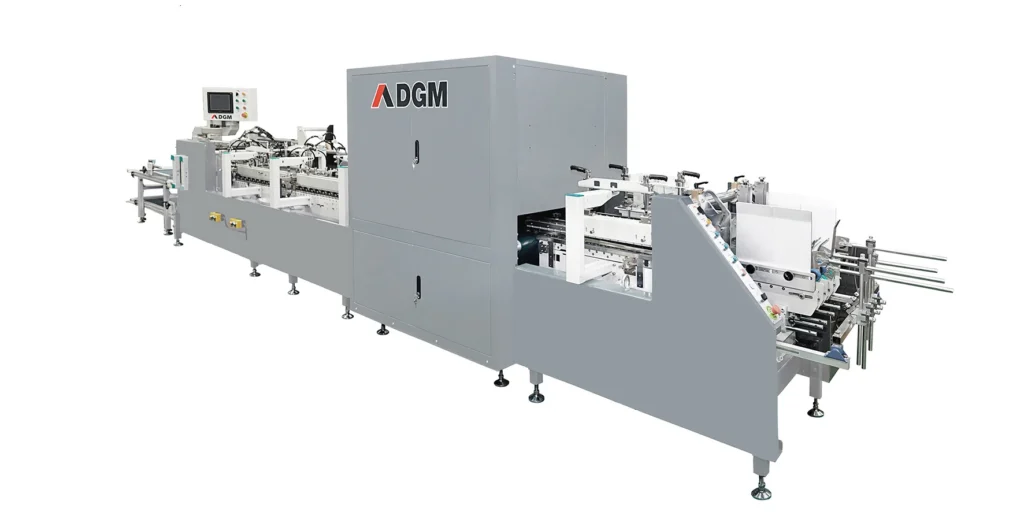
The DG Inspection is DGM’s solution for offline quality control of cartons and folding boxes, designed to inspect 100% of production with maximum precision and stability. This machine can be adapted to different box formats and production volumes while maintaining consistent and reliable performance.
Configured as a standalone unit, the DG Inspection integrates feeding, registration, machine vision inspection, and automatic ejection, making it a dedicated quality control station. It is the ideal solution for plants seeking to enhance inspection before processing on the folder-gluer.
The system uses multiple high-resolution camera stations capable of detecting defects in printing, finishes, and 3D surfaces, as well as variable data (barcodes, 2D codes, and OCR/OCV text). Thanks to its modular architecture, the machine can be configured according to the required level of control and expanded with optional cameras for inspecting metallized finishes, holograms, or the reverse side of the case.
The DG Inspection operates at high inspection speeds, maintaining precise tracking of the cartons through vacuum conveyor and lateral alignment systems. Non-conforming boxes are automatically ejected, while the system records and stores defect data, facilitating traceability, quality analysis, and audits.
The result is a robust and flexible machine, particularly suited for sectors such as pharmaceuticals, cosmetics, food, and healthcare, where process reliability and quality documentation are essential.
The DG Inspection is DGM’s solution for offline quality control of cartons and folding boxes, designed to inspect 100% of production with maximum precision and stability. This machine can be adapted to different box formats and production volumes while maintaining consistent and reliable performance.
Configured as a standalone unit, the DG Inspection integrates feeding, registration, machine vision inspection, and automatic ejection, making it a dedicated quality control station. It is the ideal solution for plants seeking to enhance inspection before processing on the folder-gluer.
The system uses multiple high-resolution camera stations capable of detecting defects in printing, finishes, and 3D surfaces, as well as variable data (barcodes, 2D codes, and OCR/OCV text). Thanks to its modular architecture, the machine can be configured according to the required level of control and expanded with optional cameras for inspecting metallized finishes, holograms, or the reverse side of the case.
The DG Inspection operates at high inspection speeds, maintaining precise tracking of the cartons through vacuum conveyor and lateral alignment systems. Non-conforming boxes are automatically ejected, while the system records and stores defect data, facilitating traceability, quality analysis, and audits.
The result is a robust and flexible machine, particularly suited for sectors such as pharmaceuticals, cosmetics, food, and healthcare, where process reliability and quality documentation are essential.
The DG Inspection is DGM’s solution for offline quality control of cartons and folding boxes, designed to inspect 100% of production with maximum precision and stability. This machine can be adapted to different box formats and production volumes while maintaining consistent and reliable performance.
Configured as a standalone unit, the DG Inspection integrates feeding, registration, machine vision inspection, and automatic ejection, making it a dedicated quality control station. It is the ideal solution for plants seeking to enhance inspection before processing on the folder-gluer.
The system uses multiple high-resolution camera stations capable of detecting defects in printing, finishes, and 3D surfaces, as well as variable data (barcodes, 2D codes, and OCR/OCV text). Thanks to its modular architecture, the machine can be configured according to the required level of control and expanded with optional cameras for inspecting metallized finishes, holograms, or the reverse side of the case.
The DG Inspection operates at high inspection speeds, maintaining precise tracking of the cartons through vacuum conveyor and lateral alignment systems. Non-conforming boxes are automatically ejected, while the system records and stores defect data, facilitating traceability, quality analysis, and audits.
The result is a robust and flexible machine, particularly suited for sectors such as pharmaceuticals, cosmetics, food, and healthcare, where process reliability and quality documentation are essential.
The DG Inspection is DGM’s solution for offline quality control of cartons and folding boxes, designed to inspect 100% of production with maximum precision and stability. This machine can be adapted to different box formats and production volumes while maintaining consistent and reliable performance.
Configured as a standalone unit, the DG Inspection integrates feeding, registration, machine vision inspection, and automatic ejection, making it a dedicated quality control station. It is the ideal solution for plants seeking to enhance inspection before processing on the folder-gluer.
The system uses multiple high-resolution camera stations capable of detecting defects in printing, finishes, and 3D surfaces, as well as variable data (barcodes, 2D codes, and OCR/OCV text). Thanks to its modular architecture, the machine can be configured according to the required level of control and expanded with optional cameras for inspecting metallized finishes, holograms, or the reverse side of the case.
The DG Inspection operates at high inspection speeds, maintaining precise tracking of the cartons through vacuum conveyor and lateral alignment systems. Non-conforming boxes are automatically ejected, while the system records and stores defect data, facilitating traceability, quality analysis, and audits.
The result is a robust and flexible machine, particularly suited for sectors such as pharmaceuticals, cosmetics, food, and healthcare, where process reliability and quality documentation are essential.