
In a cardboard converting plant, an unexpected stoppage does more than compromise machine availability. It also disrupts the production sequence, delays downstream operations and can generate waste during restart. For this reason, industrial maintenance of folder gluers and die-cutting machines should be organised according to the risk each component poses to production continuity, rather than relying solely on predefined inspection intervals.
An effective strategy combines criticality analysis, wear monitoring and an understanding of equipment mechanical behaviour. The objective is to intervene before a deviation affects quality or causes a stoppage, without introducing unnecessary maintenance operations.
How to Establish Maintenance Priorities Based on Criticality
The criticality of a component depends on its probability of failure, the consequences of a breakdown and the ability to detect deterioration before it affects production.
Establishing priorities requires analysing failure history, operating hours, load conditions and mean time to repair. A bearing showing recurrent wear, for example, may require greater attention than another component that is more expensive to replace but has a lower probability of failure.
Assessing the Impact on Availability
The analysis should consider MTBF (Mean Time Between Failures) and MTTR (Mean Time to Repair), distinguishing recurring breakdowns from isolated failures. Spare parts availability and the consequences of stopping a station that determines the performance of the entire line are also critical factors.
Incorporating the Impact on Quality
Not all failures cause an immediate stoppage. Progressive deviations in feeding, registration or adhesive application can result in non-conforming production over several cycles before being detected.
For this reason, rejection and rework indicators should form part of maintenance analysis alongside mechanical records.
Prioritising Interventions Using a Risk Matrix
A matrix combining failure probability, severity and detectability makes it possible to distinguish urgent interventions from those that can be scheduled during job changeovers or maintenance windows. Safety-related components must always be treated as a priority.
Maintenance of Industrial Folder Gluers: Mechanical Stability and Precision
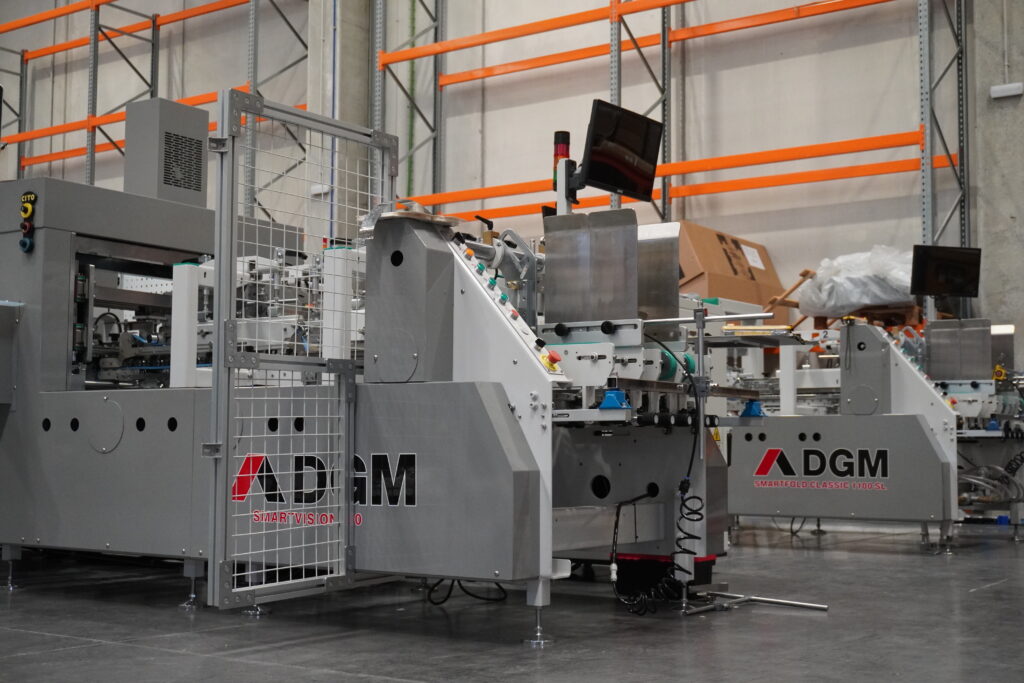
In industrial folder gluers, transport stability depends on coordination between feeders, belts, guides, folding sections and adhesive application systems.
Variations in belt tension, cardboard dust accumulation and glue residues can cause slippage, misalignment and loss of repeatability. Cleaning sensors and guiding components, together with inspecting transmissions and bearings, should be adapted to the actual workload.
Recurring adjustments during format changeovers should also be recorded. When the same correction is systematically required, it may indicate mechanical play, wear or alignment problems that should not be addressed solely through further operational adjustments.
Automatic Die-Cutting Machines: Controlling Wear Before Defects Occur
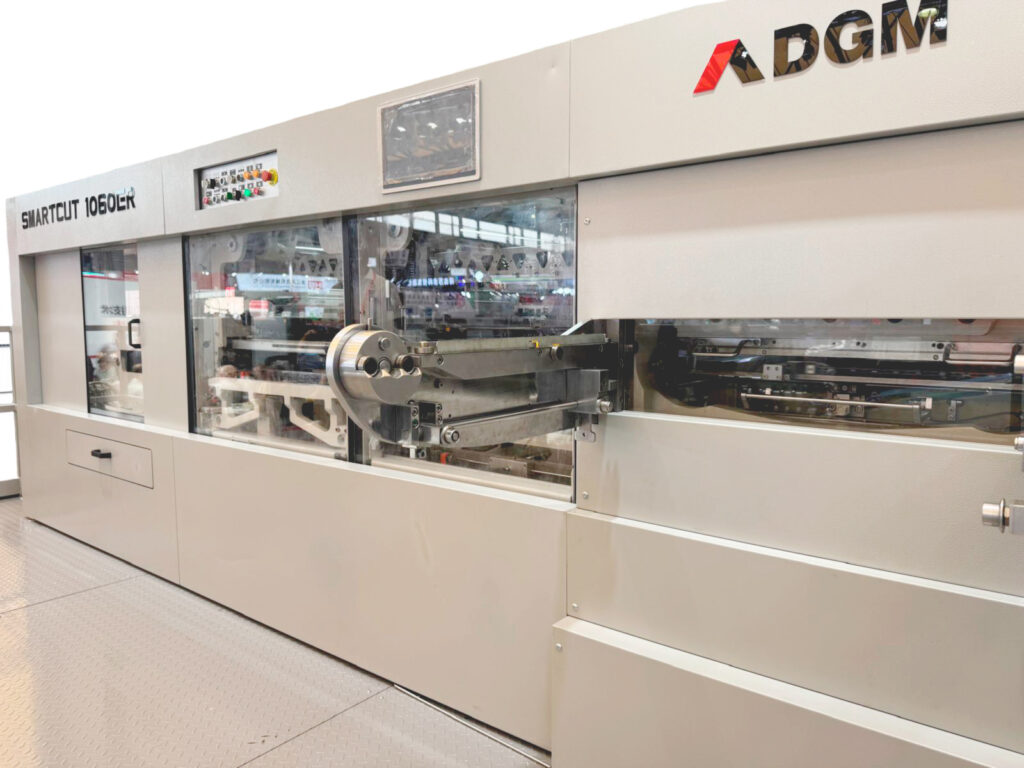
In flatbed die-cutting machines, maintenance priorities focus on feeding stability, sheet registration, die-cutting pressure and tooling condition.
Die deterioration, uneven pressure distribution or registration deviations can increase cutting defects, material waste and interruptions during waste stripping.
Maintenance should include inspection of tooling, transmission systems, guiding components and ejection mechanisms, taking into account the equipment’s specific requirements. Monitoring cutting defects helps identify deterioration trends before they require prolonged corrective intervention.
From Preventive Maintenance to Production Line Optimization
Production line optimization requires linking maintenance data with operational indicators such as availability, performance, quality and Overall Equipment Effectiveness (OEE).
Vibration, temperature and electrical consumption analysis can provide information about the condition of certain critical components. However, predictive monitoring should be implemented where there is a clear relationship between the measured variable and the failure mechanism.
Investigating the root causes of recurring stoppages is equally important. Replacing a belt without correcting the misalignment that accelerates its wear is unlikely to resolve the problem.
Critical spare parts planning and coordination between maintenance and production complete a strategy focused on reducing unplanned interventions.
DGM Service: Technical Support to Maintain Machinery Performance
The reliability of a production line depends as much on its initial configuration as on the technical support provided throughout its service life.
DGM Europe develops cardboard converting solutions, including SmartFold, TechnoFold and MegaFold folder gluers, as well as TechnoCut and SmartCut flatbed die-cutting machines. From its headquarters in Barcelona, the company provides installation, training and specialised after-sales support for the European market.
Contact the DGM Europe technical team to learn more about its machinery solutions and after-sales services, and explore how to improve the availability and performance of your cardboard converting process.