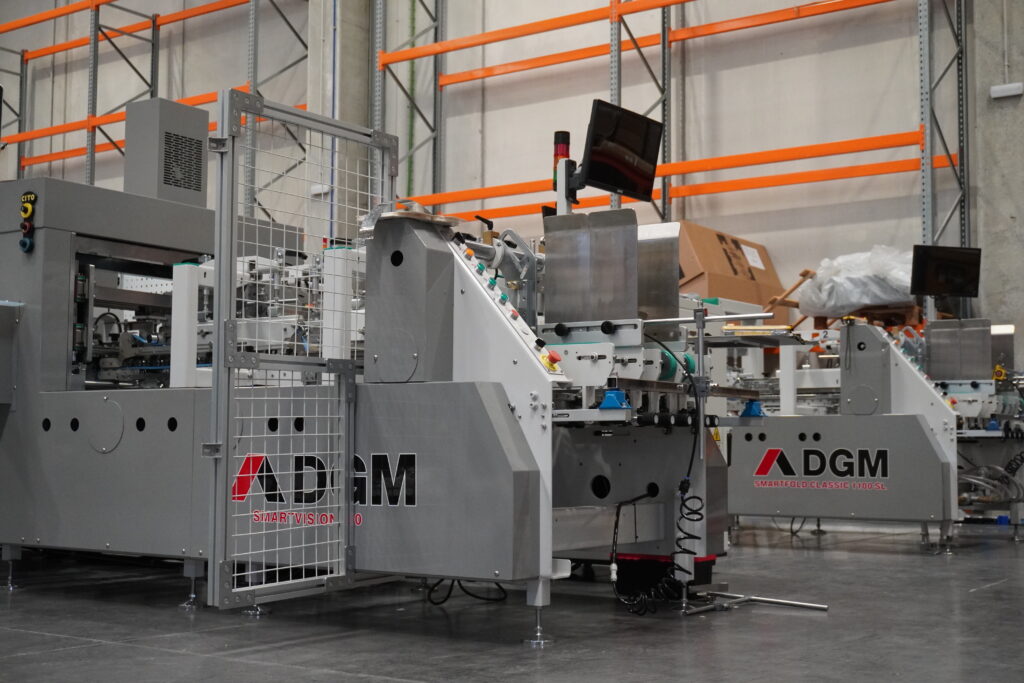

The productivity of die-cutting machines for packaging should not be assessed solely on their nominal speed, but rather on their ability to maintain consistent cutting, creasing and registration conditions throughout the entire production run.
In the industrial converting of folding cartonboard and corrugated board, repeatability depends on the interaction between material properties, sheet feeding, mechanical stability, die preparation and process control. As production volumes increase, minor variations can lead to significant losses in material, time and production capacity.
Material Stability and Registration: The Foundation of Precise Die-Cutting
Material consistency directly affects die-cutting accuracy. Variations in moisture content, thickness, grammage or stiffness can alter sheet behaviour during transport and affect the dimensional stability of the finished product.
In folding cartonboard, changes in moisture content can cause deformation that compromises registration. In corrugated board, flute geometry, compression strength and flatness irregularities introduce additional variables.
Process control must therefore begin before the material enters the machine.
Sheet Feeding and Positioning
Irregular sheet feeding causes deviations that cannot always be corrected through subsequent adjustments. Synchronisation between the feeder, registration table and gripper bars is essential to maintain consistent sheet positioning.
DGM Europe’s TechnoCut 1050-S features a registration table with push and pull guides, an antistatic surface and non-stop feeding, designed to support stable operation during continuous production.
Die-Cutting Pressure and Cutting Uniformity
Insufficient pressure can result in incomplete cuts, while excessive pressure accelerates tool wear and may damage the substrate.
Pressure adjustment must account for die geometry, cutting rule height and condition, material characteristics and pressure distribution across the working surface. The objective is not to apply the maximum available force, but to achieve a complete, uniform cut using only the necessary pressure.
Creasing Quality and Folding Performance
Die-cutting quality must also be assessed after the cutting operation. Incorrectly dimensioned creases can cause cracking, surface fractures or deformation during folding and gluing.
The relationship between board thickness, grain direction, rule height and creasing channel geometry must be validated during make-ready, particularly for demanding folding carton applications.
How to Prevent Loss of Repeatability in Long Production Runs
In industrial die-cutting machines, repeatability depends on maintaining a stable relationship between mechanical components and process conditions.
Progressive cutting rule wear, clearance in sheet transport systems and waste accumulation can alter machine performance without initially causing a production stoppage.
Quality checks should therefore extend beyond the first approved sheet. Periodic inspections of registration, cutting quality, creasing and waste removal are recommended, with inspection frequency adjusted according to job criticality and the history of process deviations.
Automatic waste removal, or stripping, also affects production continuity. Inefficient separation can lead to material accumulation, interruptions and defects in downstream operations.
Quality Control for Packaging: Measuring Stability, Not Just Rejections
An effective system of quality control for packaging must identify trends before defects exceed established tolerances.
Beyond counting rejected units, manufacturers should monitor registration consistency, cutting defects, stripping issues and process-related micro-stoppages.
Comparing results from the beginning, middle and end of a production run helps identify progressive deviations associated with wear, temperature or material conditions.
This monitoring is particularly important when die-cutting feeds downstream folding-gluing processes, where dimensional deviations can lead to additional assembly problems.
DGM Europe: Technology for Maintaining Precision at Industrial Scale
DGM Europe offers a range of flatbed die-cutting machines designed to meet different converting requirements.
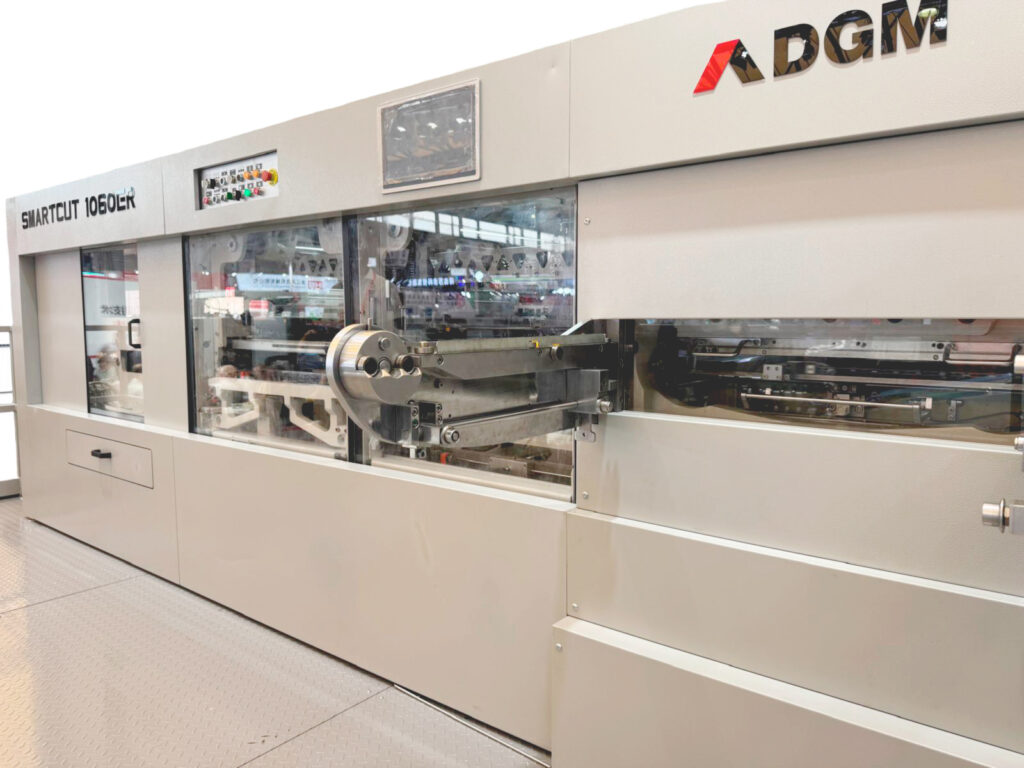
The TechnoCut 1050-S reaches speeds of up to 7,500 sheets per hour and incorporates registration systems and automatic waste stripping. For larger formats, the TechnoCut 1650-S processes corrugated board up to 10 mm thick and sheet sizes of 1,650 × 1,200 mm. Meanwhile, the SmartCut 1060 E/ER delivers speeds of up to 8,000 sheets per hour, with stripping and blanking options to automate the separation of finished products.
These configurations enable manufacturers to select a solution according to material type, sheet format, finishing requirements and production line organisation, without compromising quality in pursuit of higher operating speeds alone.
Contact DGM Europe to discover which die-cutting configuration best meets your production volumes, precision requirements and quality objectives.